Your Hoka Shoes Are Dirty — Here's What You Need to Know
Can I wash my hokas? Yes, you can — but how you do it matters a lot.
Here's the quick answer:
- Hand wash with cold water and mild soap
- Remove laces and insoles before cleaning
- Air dry away from heat and direct sunlight
- Never use a dryer — heat warps the foam and weakens adhesives
- Avoid machine washing when possible — it can break down cushioning and shorten shoe life
Hoka shoes are built with thick EVA foam midsoles and engineered mesh uppers. These materials deliver that signature cushioning and support you rely on — but they're also sensitive to heat, harsh chemicals, and aggressive washing cycles. Getting the cleaning process wrong can compress the foam, loosen glued parts, and cut your shoe's lifespan short well before the typical 250 to 500 miles of use.
The good news? Cleaning your Hokas properly takes less than 20 minutes of actual work — and the right method keeps them performing like new for much longer.
I'm Faisal S. Chughtai, a footwear expert who has spent years helping runners and active professionals find and maintain the right shoes for their needs — including answering the question can I wash my hokas for countless readers. In this guide, I'll walk you through every step of safe, effective Hoka cleaning so you can protect your investment and keep your feet feeling great.
Can i wash my hokas glossary:
Can I Wash My Hokas in the Washing Machine?
It is the question every busy runner asks: "Can't I just throw them in the wash?" While it is tempting to let technology do the heavy lifting, the short answer from both the manufacturer and footwear experts is a resounding no.

The Risks of Machine Washing
Hoka shoes are precision-engineered instruments. The thick midsoles are primarily made of Ethyl Vinyl Acetate (EVA) foam. This foam is designed to absorb impact, but the mechanical agitation of a washing machine can cause it to compress or deform. Furthermore, the high-speed spin cycle can lead to structural warping.
Research from the Footwear Manufacturers Association in 2021 noted that improper washing techniques, including frequent machine washing, led to a 30% increase in customer complaints regarding shoe durability. When you submerge the shoe and subject it to a vigorous cycle, you risk:
- Adhesive Failure: The glues holding the multi-part sole together can weaken and peel.
- Fabric Tearing: The delicate engineered mesh can snag or fray.
- Warranty Issues: Most manufacturers, including Hoka, suggest that machine washing may void your warranty.
If you are looking for a comparison on how other premium brands handle the "machine wash" debate, check out our guide on how to wash On Cloud shoes. Much like Hokas, most high-performance trainers prefer the gentle touch of a hand wash.
The Official Hoka Cleaning Method: A Step-by-Step Guide
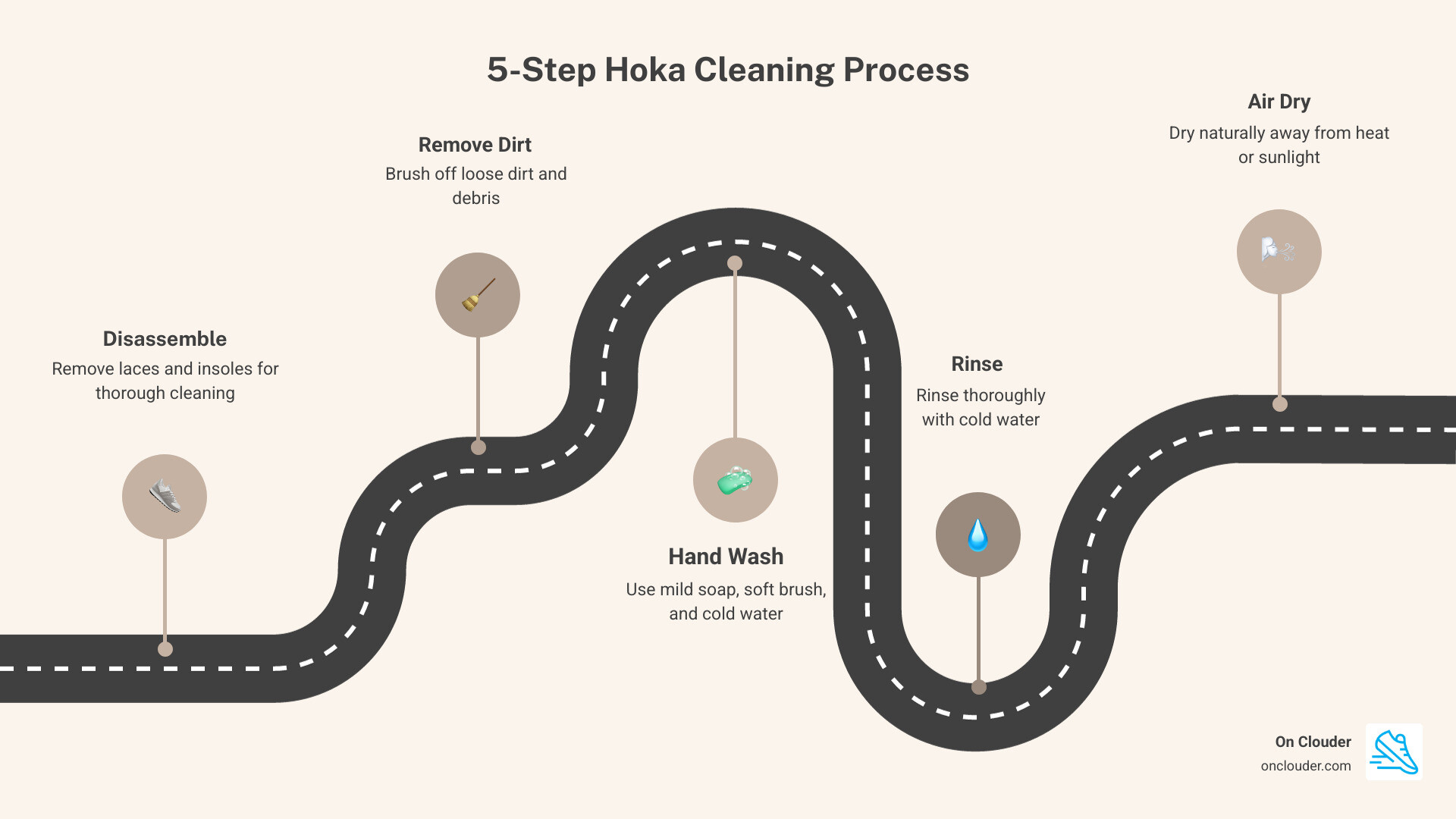
If you want to keep your "Clouds" floating, hand washing is the gold standard. It allows you to target specific stains without compromising the shoe's integrity. We have found that a little elbow grease goes a long way in preserving that 250 to 500-mile lifespan.
The Power of Pre-Cleaning
Before you ever let water touch the fabric, you need to deal with the "crust." Statistics show that 70% of runners report that pre-cleaning loose dirt significantly improves the final washing outcome. Use a dry, soft-bristled brush (an old toothbrush works wonders) to flick away dried mud and dust. This prevents you from simply rubbing mud deeper into the mesh once you add water.
| Feature | Hand Washing | Machine Washing |
|---|---|---|
| Safety | High (Recommended) | Low (Risky) |
| Control | Excellent for stains | Poor |
| Drying Time | 12-48 hours | 12-48 hours |
| Material Impact | Minimal | High (Foam compression) |
Preparing Your Shoes: Laces and Insoles
Never wash your shoes as a single unit. Proper disassembly is the secret to a deep clean.
- Remove the Laces: This allows you to reach the dirt trapped behind the eyelets and on the tongue. We recommend soaking the laces in a bowl of warm, soapy water for about 20 minutes. For an extra deep clean, you can put them in a small mesh bag and toss them in with your regular laundry on a cold cycle.
- Pull the Insoles: The insoles (or liners) absorb the most sweat and odor. Scrub them gently with a soapy cloth and let them air dry separately. That even with perfect cleaning, insoles usually last three to six months depending on your mileage. Replacing them can give your shoes a "new shoe" feel without the $160 price tag.
For more detailed steps on handling various components, see our step-by-step guide to cleaning sports shoes.
How to Clean My Hokas by Hand
Once disassembled, follow these steps:
- The Solution: Mix lukewarm water with a small amount of mild detergent or dish soap. Avoid bleach or harsh chemicals that can break down synthetic fibers.
- The Scrub: Dip a soft brush or cloth into the solution. Use circular motions on the upper. For the midsole (the thick white or colored foam), you can use slightly more pressure.
- The "Secret" Tools: Many enthusiasts swear by Shout Spray for stubborn stains on the mesh. Another great option is a SneakERASER sponge, which works like a pencil eraser for the scuffs on the foam midsoles.
- The Rinse: Use a clean, damp cloth to wipe away any soap residue. Do not submerge the shoes entirely in water, as this can saturate the internal foam and take days to dry.
Material-Specific Care: Mesh, Suede, and GORE-TEX
Not all Hokas are created equal. A Clifton 9 has different needs than a leather Kaha hiker or a GORE-TEX Speedgoat.
- Engineered Mesh: This is the most common Hoka material. It is breathable but prone to fraying. Use a "dabbing" motion rather than aggressive scrubbing to keep the fibers intact.
- Suede and Nubuck: Never use water first. Let the mud dry completely, then use a specialized suede brush to "lift" the dirt out. If you get them wet, you risk staining the delicate hide.
- GORE-TEX (Waterproof): These require a bit more love. You can use lukewarm water to clean the surface. Over time, the Durable Water Repellent (DWR) coating wears off. After cleaning and drying, we recommend reapplying a waterproof spray to ensure water continues to bead off the surface.
- Leather: Use a damp cloth and a leather-specific cleaner. Avoid soaking leather, as it can become brittle when it dries.
How to Properly Dry and Store Your Hoka Shoes
Drying is arguably the most important part of the process. 65% of users find that proper air-drying is the single most important factor in maintaining the shoe's structure and performance.
The Air-Drying Protocol
- The Stuffing Method: Stuff your shoes with plain brown paper or newspaper (avoid pages with heavy black ink that might bleed). This absorbs moisture from the inside out and helps the shoe maintain its shape.
- Airflow is King: Place your shoes in a well-ventilated area. Using a standard floor fan can speed up the drying process by up to 50%, often bringing the time down from 48 hours to less than 24.
- Shadows are Your Friend: Keep shoes out of direct sunlight. UV rays can fade the vibrant Hoka colors and cause the synthetic materials to become brittle.
Why You Should Never Use a Dryer on My Hokas
If you take one thing away from this guide, let it be this: Keep your Hokas away from the dryer. The intense, concentrated heat of a dryer is the natural enemy of EVA foam. It can cause the midsole to shrink or warp, effectively ruining the "rocker" geometry that Hoka is famous for. Heat also liquefies the adhesives, leading to the sole peeling away from the upper (delamination).
Proper Storage
To maintain their condition, store your Hokas sole-down. Storing them on their sides or crushed under other shoes can create permanent creases in the foam. We also suggest a "shoe rotation." If you run every day, having two pairs allows one to fully decompress and dry out between sessions, significantly extending the life of both.
Maximizing Longevity and Removing Odors
Hoka shoes typically last 250 to 500 miles. However, if you take care of the "stink" and the "grit," you're more likely to hit that upper limit.
Odor Removal Tips
- Baking Soda: Sprinkle a little baking soda inside your shoes overnight to neutralize acids and absorb moisture. Just remember to shake it out before your next run!
- Vinegar Solution: A 50/50 mix of water and white vinegar sprayed lightly inside the shoe can kill odor-causing bacteria.
- Insole Maintenance: Since insoles are the primary odor-trappers, washing them more frequently than the rest of the shoe is a smart move.
Cleaning Frequency
How often should you ask yourself, "can i wash my hokas?" If you're a daily runner, a light spot clean every other week is ideal. A deep clean should only happen when they are visibly muddy or start to develop a persistent smell. Frequent deep soaking can actually accelerate the breakdown of materials, so "less is more" when it comes to water.
Frequently Asked Questions about Hoka Maintenance
How often should I clean my Hoka shoes?
For most users, a quick wipe-down after a dusty run is enough. A full hand wash is recommended once a month or whenever they become heavily soiled. Regular maintenance prevents dirt from acting like sandpaper on the mesh fibers.
Can Hoka shoes get wet in the rain?
Absolutely. They are designed for the elements. However, the key is what you do after the run. Don't leave them in a gym bag. Remove the insoles, stuff them with paper, and let them air dry immediately to prevent mold and "sour" smells.
Do Hoka shoes shrink after washing?
If you hand wash with cold water, they will not shrink. However, if you use hot water or put them in the dryer, the synthetic uppers and foam midsoles can absolutely shrink or warp, changing the fit of the shoe.
Conclusion
Your Hokas are an investment in your health and comfort. Whether you are a marathoner or a nurse on a 12-hour shift, keeping your shoes clean ensures that the cushioning stays responsive and the support remains intact. By avoiding the washing machine, embracing the hand-scrub, and allowing for plenty of natural airflow, you can ensure your shoes go the distance.
At On Clouder, we are dedicated to helping you get the most out of your high-performance footwear. Proper care doesn't just make your shoes look better; it makes them last longer and perform better.
Ready to upgrade your rotation or learn more about the best walking shoes on the market? Learn more about maintaining your footwear and choosing the right pair for your needs.



0 Comments